The Power Of Being Alone
Being alone isn't the problem. Never learning how to be is. A quiet, honest look at why solitude feels harder than it should.
THOUGHT PROVOKING
Shreyash Manral
6/3/20267 min read
Is this a power, so to speak? Do you feel you’ve accomplished something if you’re well capable of enjoying your own company? I mean, that is the whole point of being in your own company, all by yourself, isn’t it?
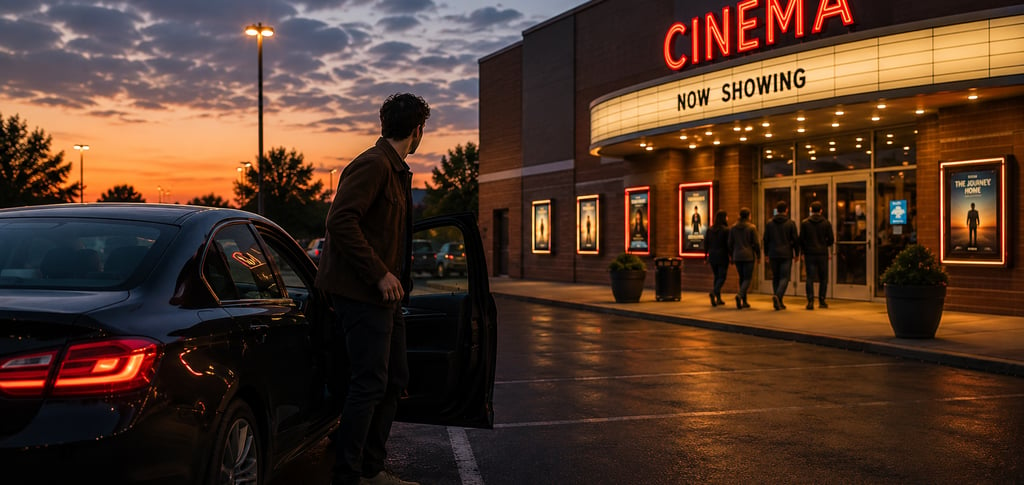
You know, I read this quote somewhere; I don’t quite remember it word-for-word, but from what I recall, it emphasised how great an achievement it is to be able to watch a movie all by yourself in a theatre. Up until “…all by yourself…” you must’ve thought, Hey! What’s the big deal here?! It’s the part where you get up, dress up, or not (completely subjective; not judging), and head for the nearest theatre to watch just any movie, or something that you truly want to.
The point is, how come watching a film all by ourselves could look like such a big task? Well, you wouldn’t know unless you try, and you’ll know exactly what that is when you do.
We aren’t the only ones to think about it. Social media has done many things since its arrival back in the day, be it helping people get in touch after years of separation, keeping people in touch, or helping people discover new people on a virtual platform. It doesn’t stop there. Is it necessarily good or not? Wait! I did write a blog on it. Check it out here. This very platform did make me notice some people out in the world who think spending time with themselves, doing nothing or something, is just pure fun and something that surprisingly heals something inside you.
Now, I want to sit with that last bit for a second. Heals something inside you. That’s a loaded phrase, isn’t it? What exactly is broken that needs healing? And when did we decide we needed other people in the room, or at least on the other end of a scree, to feel like whatever we were doing was worth doing at all?
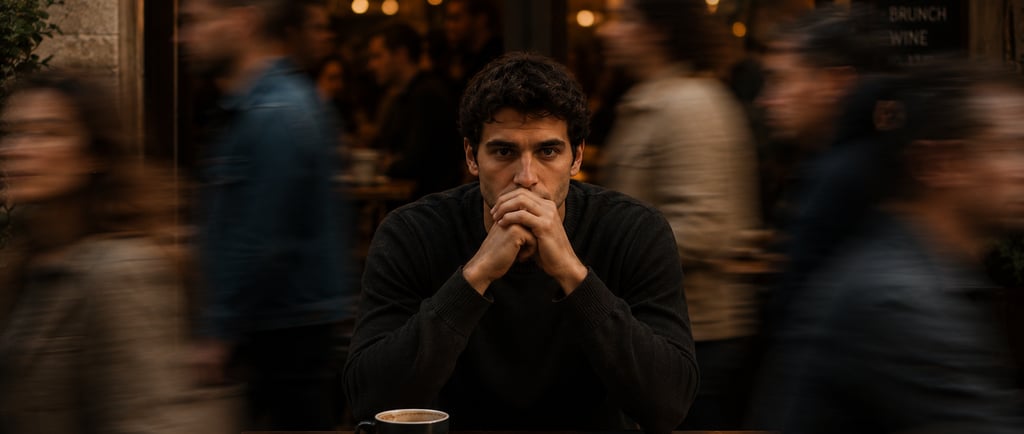
I think it started small. Or maybe it was always there, and we just never examined it closely enough. Think about the last time you sat at a café by yourself. Not waiting for someone. Not killing time between two appointments. Just… sitting. With a cup of something warm, and no agenda. Did it feel liberating? A little uncomfortable? Did you take out your phone within the first ninety seconds? No judgment, I’ve done it too. More times than I’d like to admit.
There’s something about being in a public space, alone, that makes us self-conscious in a way that being alone at home simply doesn’t. At home, aloneness is neutral, you’re just existing in your space. But in public? Suddenly you feel like you need a prop. A book. Earphones. A phone. Something to signal to the world, or maybe just to yourself, that you aren’t lonely. That this is a choice. Because there’s a difference, isn’t there? Lonely and alone. One is something that happens to you. The other is something you can, if you let yourself, actually choose.
I remember the first time I properly ate at a restaurant by myself. Not a quick bite at a fast-food counter where everyone’s in transit anyway, but an actual sit-down place. Ordered a proper meal. Sat through the whole thing. No book, no phone beyond locking the screen and putting it face-down. I’d like to tell you it was deeply enlightening from minute one, but it wasn’t. The first ten minutes were awkward. I was acutely aware of the couple next to me, the group of friends laughing loudly two tables over, the waiter who I was convinced was pitying me just slightly. I was doing that thing where you try to look purposeful, like you’re thinking very hard about something important, maybe saving the world in your head, definitely not just sitting there with nothing to do.
But then, somewhere around the time the food arrived, something quietly shifted. I stopped looking around. I stopped performing. I just… ate, because I was terribly hungry. Even though I was busy eating, there were constant thoughts in my head, and the thoughts weren’t even particularly profound. I wasn’t solving anything, wasn’t arriving at some great revelation about life. I was just present with myself. Which, I realised later, is rarer than it sounds.
Here’s what I think is actually going on. We have been so thoroughly trained, by routine, by culture, by the way our phones are designed, to never really be alone with our thoughts, that when we find ourselves there, it feels wrong. Like a gap that needs to be filled. You’re waiting for a friend who’s running late? Phone out. You are in a lift? Phone out or at least stare intensely at the floor indicator. You’re lying in bed, technically doing nothing? Ten minutes of mindless scrolling, because the ceiling is boring and your brain is loud.
And the brain being loud is the real thing, I think. That’s what we’re avoiding. Not boredom, that is still manageable. It’s the noise inside that we don’t quite know how to be with. The unfinished thoughts. The low-grade anxieties. The things you told yourself you’d think about later and late, which never come, until times like this.
Being alone, really, intentionally alone, puts you in the room with all of that. And that’s the part nobody warns you about. It’s not just peace and coffee/tea (or beer, whatever’s your poison) and beautiful solitude. Sometimes it’s sitting with thoughts you’d rather not have, questions you don’t have answers to, feelings that don’t have neat little labels. And somehow, we’ve collectively decided that the best response to all of that is to just stay busy enough that we never have to encounter it at all.
I want to push back on something, though. Because I don’t think it’s all avoidance. Some of it is genuine unfamiliarity. We’re social creatures, and this is uncontested. The need to belong, to connect, to be witnessed by other people, is wired into us deeply. So, when we find being alone uncomfortable, we’re not necessarily being weak or avoidant. We might just be… out of practice. Like a muscle that hasn’t been used in a while. It doesn’t mean the muscle is gone. It just means you must ease back into using it.
And that, I think, is the gentler way to look at it. Not: why can’t you just enjoy your own company? But more: when did you last give yourself a proper chance to?
Because truly being alone, the kind where you aren’t just physically by yourself but also mentally present, not half-distracted by a podcast or a TV show you’re only half-watching, that kind of aloneness takes some practice. You have to, almost, learn how to do it again. Or maybe for the first time.
There’s this another phrase I’ve heard, and it’s been floating around enough that I imagine you’ve come across it too, about how the quality of your relationship with yourself determines the quality of every other relationship you have. I used to find that a bit cliché, honestly. One of those things people say that sounds wise but feels vague. But the more I’ve thought about it, the more I think there’s something real in there.
Because when you’re not comfortable alone, when silence feels like a threat rather than a pause, you start to look to other people to fill that gap. And that’s where it gets complicated. Because no person, no matter how good and wonderful and well-meaning, can fill a space inside you that only you have access to. That’s too much weight to put on someone else. And it’s also a bit unfair, if you think about it. To need another person to complete the basic loop of feeling okay about existing.
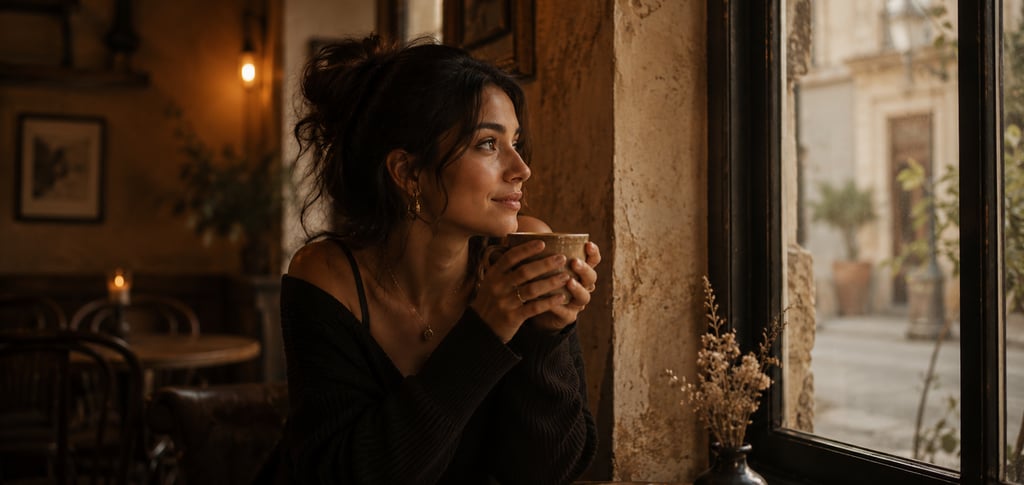
I’m not saying become an island. That’s not the point at all. The point is more like, can you sit with yourself for an hour without feeling like something is missing? Can you go for a walk and let your mind do whatever it wants to do without immediately narrating it to someone? Can you watch that movie in the theatre, buy yourself the popcorn, and genuinely enjoy it, not because you’re proving something, but because you actually can?
That theatre thing stays with me. I keep coming back to it. Because there’s a specific courage in doing something that feels socially legible only with company, but doing it anyway, alone. Going to a concert alone. Travelling alone. Spending a long Sunday entirely by yourself, not as a consolation but as a deliberate thing. These are small acts, but they’re also quietly radical in a world that keeps asking: who are you going with? who did you go with? who were you with?
As if the presence of other people is the thing that validates the experience. As if without a witness, it barely happened.
But here’s the thing I’ve slowly come to realise, there have been some great moments in my life where it was just me, and no one else was there. A long drive with no destination. A particularly good afternoon doing absolutely nothing of consequence. A walk in a neighbourhood I’d never been to (Oh! Do I love doing that or what!), stopping where I felt like stopping, moving on when I wanted to. These things don’t make for much of a story later. “I went for a walk, and it was good” doesn’t really land at a dinner table. But they land with you. They settle somewhere. And I think that matters more than we give it credit for.
So yes. I think it is a kind of power. Not in a grand, achieved-something-monumental way. But in the quiet, private, doesn’t-need-to-be-announced way that a lot of the most important things tend to be.
Being okay with yourself. Being okay alone. Finding that the silence isn’t actually empty, it’s just quieter than you’re used to, and there’s a difference.
You don’t have to have it all figured out before you try. You just have to try. Start small if that helps. Sit with your coffee before you open anything. Take a longer route somewhere. Eat alone once and see what happens.
You might surprise yourself. Or you might just finish the meal and feel completely ordinary about it. And maybe that’s the whole point, that it becomes ordinary. That your own company stops feeling like something to get through and starts feeling like something worth showing up for.
That’s not a small thing. That’s actually quite a lot.
Until next time.