
The Daily Social Media Dilemma: To Post or Not to Post?
Why does posting online feel effortless for some people and mentally exhausting for others? Maybe social media is changing us more than we realise.
THOUGHT PROVOKING
Shreyash Manral
10/11/20244 min read


Is Posting Every Day a Skill, a Strategy, or Just a Habit?
In the age of social media, not posting often can start to feel unusual. Silence is no longer just silence. It can look like an absence. Meanwhile, some people seem to post without effort, almost as if sharing their life online is as ordinary as breathing. A story in the morning, a random thought at noon, a quick update in the evening, and somehow, they keep it going day after day.
For some of us, even deciding what to post can feel strangely difficult.
That is what makes daily posting so interesting. Is it a habit, a skill, a personality trait, or simply a sign that someone has grown comfortable living in public? Maybe it is a little of all of them. But the larger question is not just why some people post every day. It is why the rest of us keep looking at them as though they have solved some mystery of the uncharted universe.
Somewhere along the way, social media may have quietly turned expression into a kind of daily performance. A post perhaps is not just a post anymore. It is a signal. It says, I am here. I am active. I have something to share. And perhaps most importantly, I still exist in the feed.
The moment that signal goes out, it is measured. Likes, views, comments, shares, followers. Everything somehow becomes a number, and numbers seem to have a strange way of making even the smallest thing feel important.
Numbers sure are important, aren’t they?
That is where the mind gets involved in its usual dramatic way. Give humans a metric, and chances are, we will begin chasing it. Give us a score, and we may slowly begin treating it as the truth. Somewhere in the middle of all that, a post can stop feeling like a thought and start feeling like a test. A test of relevance, taste, reach, and sometimes even self-worth.
That is perhaps why frequent posters often seem effortless from the outside. It is not always confidence. Sometimes it may just be familiarity with the game. Think of this analogy: have you seen grandmasters play chess? The speed at which they think, strategise the next five moves altogether, and play. All of it looks daunting to us feeble minds, but for them, it is just another day.
Now, what are those characteristics that help you play this game?
Some people are naturally expressive. Some are building a brand. Some enjoy the rhythm of it. And some may have simply become very good at separating the act of posting from the emotional weight of being watched. The rest of us, meanwhile, overthink one caption as though it contains the future of civilisation.
For brands and marketers, the logic perhaps becomes even clearer. The more you show up, the more likely you are to stay visible, stay remembered, and stay in the conversation. Algorithms seem to reward activity, and audiences usually reward familiarity. Repetition builds recognition. Recognition can slowly become trust. On paper, it all appears to make perfect sense.

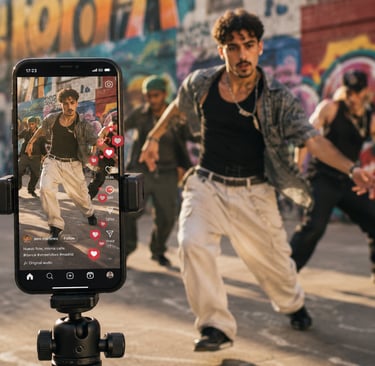
Woah, woah, woah. Wh… what even is all that? God, my head is spiralling. What a mess.
Because once posting starts becoming an obligation, the creative act itself may begin changing shape. You stop asking what feels worth saying and start asking what needs to be posted. That small shift perhaps matters more than we think. It is the difference between expression and maintenance.
At some point, your content calendar can begin feeling like a supervisor. Every day, you want something from yourself. Every idea must be useful. Every image must work. Every caption must land.
Now, I would not say that is necessarily bad. Far from it.
If you look at the brighter side of it, perhaps it sharpens your voice. Maybe it helps you find rhythm, confidence, and consistency. There is genuine value in showing up often, especially if you are trying to build something over time. Repetition perhaps does something strange to the internet. It compounds. The internet may be noisy, but it perhaps remembers the people who keep appearing.
Still, there is probably a cost when the pressure to stay visible starts overpowering the desire to say something meaningful. I sometimes wonder whether daily posting slowly flattens originality, especially when every piece of content begins feeling like a requirement rather than an idea worth sharing.
And maybe that is where things start becoming exhausting.
The feeling that you must always be interesting. Always polished. Always ready to perform a version of yourself that is easy to consume. That sounds tiring just reading it. And for most people, I am not sure it is as sustainable as it may look from the outside.
Maybe the real question is not whether posting every day is good or bad. Maybe the better question is what it is doing to the person doing it.
Is it helping them communicate more clearly? Is it helping them build something worthwhile? Is it helping them think? Or is it slowly turning every ordinary moment into material for display?
Now take a moment there… sigh
That is a lot so far, isn’t it?
There is something a little absurd about all of this when you step back. Human beings once worried about food, weather, safety, and survival. Now, many of us spend time trying to figure out how often we should announce our existence to the internet.
Perhaps we built an economy around attention, and then acted surprised when attention became addictive.
Somewhere along the way, presence itself may have become a product. And maybe that explains why everyone seems slightly tired.
So perhaps the answer is not to post less or post more. Perhaps the real question is whether the posting still belongs to you. If it does, then it can be useful. If it does not, then perhaps no amount of consistency will really make it meaningful.
In the end, daily posting is not automatically wise, and it is not automatically foolish either. Maybe it is simply a tool. A loud one. A useful one. A slightly ridiculous one. Whether it becomes expression, strategy, or noise probably depends on the thought behind using it.
And that is perhaps the part worth paying attention to.
So maybe… watch that thought.