
The Awakenings (1990)
A moving look at Awakenings: a neurologist, frozen patients, and a fleeting miracle. A story of hope, loss, and the fragile triumphs of neuroscience.
MOVIE REVIEW
Shreyash Manral
3/16/20264 min read

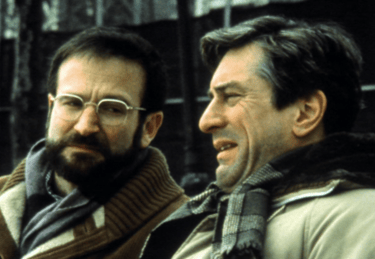
Nothing short of a masterpiece. The story is powerful in its essence, showing both the miracle and the tragedy of neurological sciences. Robert De Niro and Robin Williams being this great a pair is something that one must witness with their own eyes.
What should I say about the story? Hmm… there should be just the right amount of information for you to get interested in witnessing this piece of art, without spoiling its fun.
For all the Robin Williams fans from Jumanji, or all of Robert De Niro’s fans, I’m sure there will be no need for any extra effort in convincing. You guys already are. But for those who (apparently living under a rock!) are unfamiliar with either one of them, or both (really?), it will surely take, may I say, a nudge. May this blog act as one.
The story follows Dr. Malcolm Sayer, played by Robin Williams, who finds himself starting work at a hospital in New York that houses patients who have been motionless and unresponsive for decades. Mind you, these patients literally exist in a frozen state, or at least that was what had been established before Dr. Sayer began noticing otherwise. Malcolm is a shy person by nature, and a neurologist. There is no connection there, I am certainly not hinting at either being complementary to the other. The point is, what better place to work for a man uncomfortable making conversation with random people than a place where there is absolutely no one that even hints at being present? Dr. Sayer begins noticing certain responses from these patients when exposed to particular stimuli. The triggers varied for different patients. No two responses were quite the same. Even when they appeared similar, it would have been nothing more than coincidence.
Just a little backdrop on what exactly was wrong with these patients and what led to it. All of them were survivors of the epidemic of Encephalitis lethargica in the 1920s. Although they survived the epidemic, a post-illness condition developed that resembled Parkinson’s disease. This condition was later termed post-encephalitic parkinsonism.
Image: Robert De Niro and Robin Williams in Awakenings (1990). Source: IMDb
It is not only the story of this brilliant neurologist, but also of one of the many patients who awakens from his decade-long sleep: Leonard Lowe. Merely a boy when he succumbed to the brutality of fate. Now there are not many occasions where we can actually commend De Niro’s acting skills, now can we? Utter nonsense! He is one among the very few legends in Hollywood and worldwide cinema for exactly that reason. A complex character that he plays with utmost sincerity and truthfulness. Can you comprehend the complexity? This patient had been motionless, essentially frozen, for nearly two decades. Imagine the surprise, the sorrow, the overwhelming realization of having missed out on everything. All of it comes rushing back the moment this person wakes up. And you have to express that. Act that out. That is the complexity.
Moving ahead with the story, Dr. Sayer begins testing a new drug that had recently been engineered to treat Parkinson’s disease: L-DOPA. Want to know more about it? Jump on the link. The idea was to increase dopamine levels in the brains of these patients, since dopamine deficiency was believed to be the cause of the state they were in. It did produce results, but they were not consistent at a fixed dosage, so the dosage had to be increased.
Through persistent experimentation, adjusting dosages and trying different permutations to understand how the human brain responds to this drug, around twenty patients being studied began to show dramatic awakenings. Leonard Lowe takes full advantage of this new state of his. He wants to live. In some ways he becomes a support for Dr. Sayer. They begin to bond. This shy doctor finds a companion in a man who, not so long ago, was technically frozen in time, and who is now helping him navigate personal matters. Not all patients look at it that way. For some, the awakening is a shock. Some fall into depression after realizing how much time has passed and how much of life they have missed. Some discover their loved ones have moved on. For them, time had been frozen. For everyone else, it had continued.
The story finishes with a peculiar ending. It is both a win and a loss. It is a win for neuroscience. The drug does show an effect, and what an effect it is. But it does not last long. The patients begin adapting to the increasing dosages, and gradually things return to square one.
Leonard, by now, had begun imagining a future where he could lead a normal life. Someone to love, perhaps a family to care for, a life he would work hard to build. And not just him. Many others had begun to think the same way. The blow that follows is not soft for any of them. The fear of returning to that boxed-in state, where all they could do was breathe, becomes almost impossible to comprehend after having witnessed even a brief ray of hope.
One cannot help but wonder why it had to unfold this way. You wake them up, giving them a glimpse of life again, only for them to discover that the miracle is temporary and far more short-lived than anyone expected. Whether you think you are capable of handling the full spectrum of emotions this film will put you through or not, you must watch it.
Also, it is based on a real story. This actually happened.