Methanol: A fuel for the future
You've never thought about methanol. That's exactly the problem. Here's why this overlooked molecule matters more than you think.
SCIENCE AND TECHNOLOGY
Shreyash Manral
6/13/202612 min read
There’s a molecule. One carbon. Four hydrogens. One oxygen. In your hand, it would look like nothing, colourless, barely any smell, close enough to water that you’d have to think twice. And yet this molecule has been burning in race car engines since 1965. It powered some of the first liquid-fueled rockets. It sits in every major chemistry lab on Earth. And right now, in 2026, the world’s largest shipping companies are betting billions of dollars on it.
It’s methanol. And there’s a very good chance you’ve never thought about it once in your life.
That’s kind of the problem. Because while the world has been arguing about electric cars and hydrogen fuel cells and whether solar panels are efficient enough, methanol has been sitting quietly in the corner. It was always there, but you would certainly have missed how important that one compound will be in the future to come, which is now the present.
I want to tell you why. And I want to be honest about the complications, because there are real ones. But I also think by the end of this, you’ll understand why some very serious people believe this small, overlooked molecule might be one of the more important tools we have for the mess we’ve made.
First, what is methanol?
Methanol, also called methyl alcohol or wood alcohol, is the simplest member of the alcohol family. Its chemical formula is CH₃OH. One carbon atom bonded to three hydrogens and one hydroxyl group. If you’ve heard of ethanol, that’s the alcohol in beer, whiskey, and hand sanitiser. Methanol is one step simpler, with one less carbon.
That doesn’t sound like a big deal. But it changes almost everything about how it behaves.
CAUTION One important thing first, since it needs to be said: methanol is not the same as ethanol. This matters because methanol is toxic. Your liver can process ethanol. It cannot process methanol. Drinking it can cause blindness, and in higher doses, death. So, we’re talking about an industrial fuel and chemical here, not a beverage.
Good. With that out of the way, let’s talk about why it’s actually remarkable.
Methanol has an energy density of around 20 megajoules per kilogram. Gasoline sits at about 44. At first glance, that sounds terrible; why would you use a fuel with half the energy? Here’s the thing though. Methanol has an octane rating of approximately 114. Gasoline? Around 87 to 93. That higher octane rating means methanol resists engine knock far better, which allows engines to run at higher compression ratios, which means higher efficiency. For non-motor enthusiasts, it’s just better at giving better performance.
When you optimise an engine specifically for methanol, you can recoup a 25 to 30 % efficiency improvement over a standard petrol engine.
There’s also methanol’s heat of vaporisation, when it evaporates inside an engine cylinder, it pulls roughly three times more heat out of the air-fuel mixture than gasoline does. The result is a denser, cooler charge entering the cylinder. More mass, more power potential, cooler running temperatures. This is exactly why methanol has been used in high-performance racing for decades.
The Indy 500 ran on methanol as its official fuel for forty years, from 1965 to 2006. Racing engineers love it because it lets you extract power from engines that would destroy themselves on regular fuel.
And it burns cleaner at the point of combustion, no sulphur, no heavy metals, dramatically fewer of the particulate pollutants that make urban air quality so quietly deadly. The exhaust of a methanol combustion is, essentially, carbon dioxide and water.
Okay. So basically, it’s a miracle fuel. Then why is it not something which is used in place of either diesel or petrol? I’m sure you have that question in your mind.
The real Achilles heel is the range problem. Because of that lower energy density, a methanol-powered vehicle needs roughly twice the volume of fuel to travel the same distance as a petrol-powered one. Bigger tank, or more frequent stops. That’s a genuine practical problem, and it’s one of the reasons methanol never went mainstream as a transport fuel in the twentieth century.
But here’s the thing. The twentieth century is over. And the problem we’re trying to solve now isn’t just efficiency. It’s survival.
The world still runs on fire.
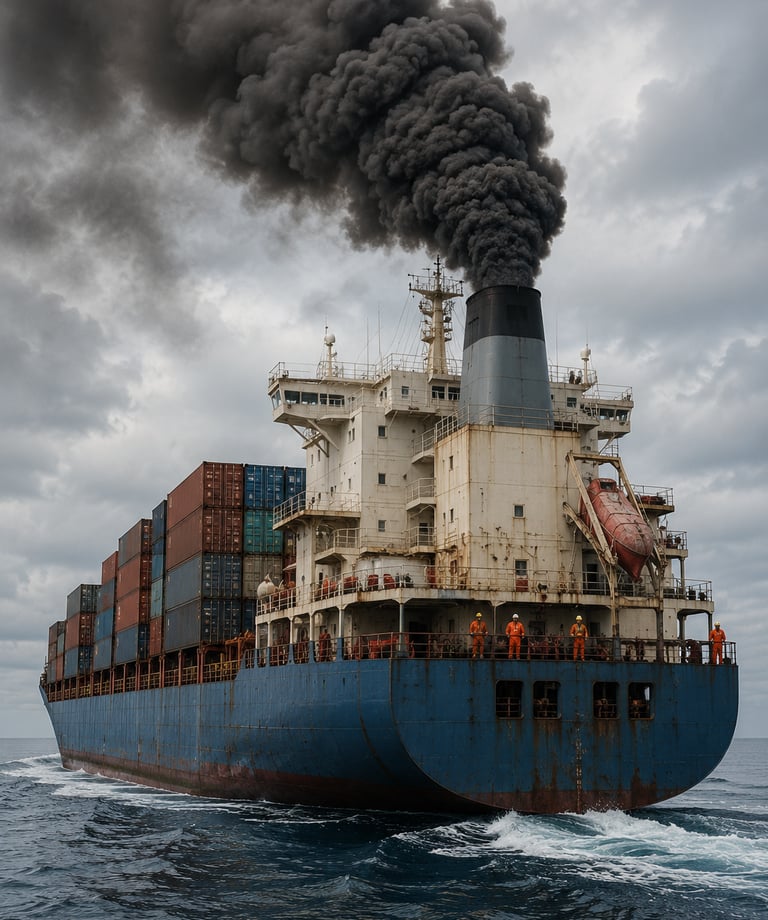
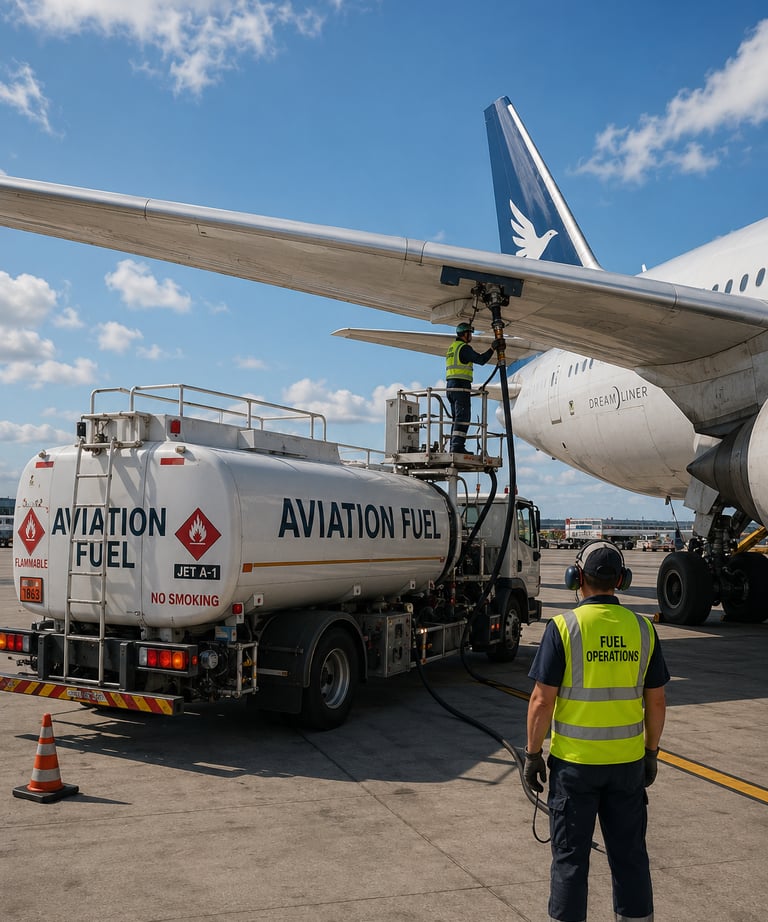
Zoom out. Way out. Every city lit up on a map at night? Running on fossil fuels. Every ship crossing every ocean? Burning bunker fuel, one of the dirtiest substances we routinely combust at industrial scale, which also happens to have an upcoming solution, which we will talk about later. Every plane in the sky? Jet fuel. In 2025, fossil fuels - coal, oil, and natural gas - still supplied roughly 73 % of all energy used on this planet. Despite decades of climate conferences.
Despite the Paris Agreement. Despite trillions poured into renewables.
The International Energy Agency projected, in its 2025 World Energy Outlook, that global demand for coal, oil, and gas would peak sometime before 2030, for the first time in recorded industrial history. Does that ring as good news? Is it bad? Well, I don’t think we’re living under a rock, so we very well know what that means.
Renewables are scaling impressively. Solar and wind are genuinely getting cheaper and more capable. There is no doubt in that, but they don’t solve everything. Electricity is great for powering homes. It’s getting better at powering cars. But what about ships crossing the Pacific Ocean? Long-haul aircraft? The massive industrial furnaces that make steel and cement and fertiliser? Millions of people in places where charging infrastructure is years away from being viable?
Electric grids can’t do everything. At least not yet. What a whole category of applications needs is a liquid fuel. Something you can store and transport and pour into a tank. Something that works, at least partially, with infrastructure that already exists. That is a very important point. Can you comprehend that?
Imagine this. We have everything that is required - production, storage and transportation infrastructure - but all of that must be built from scratch. More land required, more material required to build the facilities, and more energy consumed in getting all of that done and more. How do you account for that? Honestly speaking, that is more harm done than what we sought out to curb.
Hence, we say it has to be compliant with the existing infrastructure, at least partially, which doesn’t make the carbon problem worse.
That’s a difficult brief. And methanol, it turns out, fits it better than almost anything else on the table.
But, and this is critical, the methanol we make today is not that solution. Not even close.
The source matters. Enormously.
Methanol, as a molecule, is neither good nor bad for the environment. What completely determines whether it’s a climate solution or a climate disaster is how you make it.
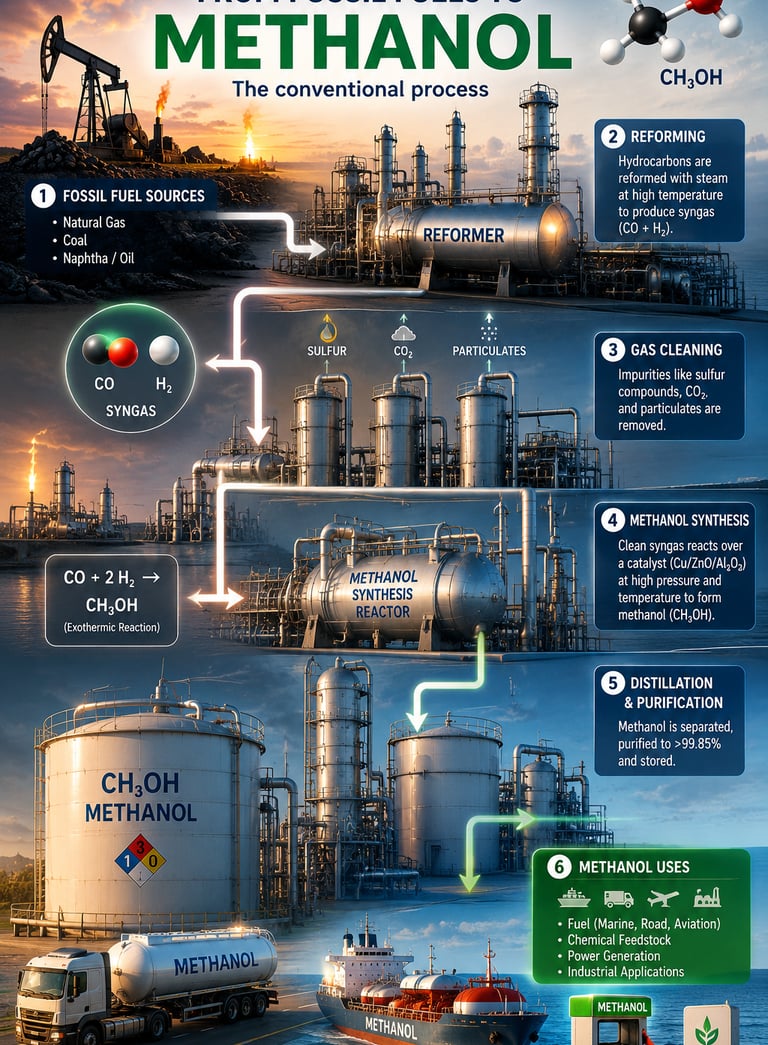
Today, the overwhelming majority of the world’s methanol, around 70 to 90 percent, is what industry insiders call “grey methanol.” It’s made from natural gas through a process called steam methane reforming. You take methane, react it with high-temperature steam, produce a mixture of carbon monoxide and hydrogen called syngas, pass that over a catalyst, and out comes methanol. It’s a mature, well-understood, century-old industrial process. And that’s exactly the problem.
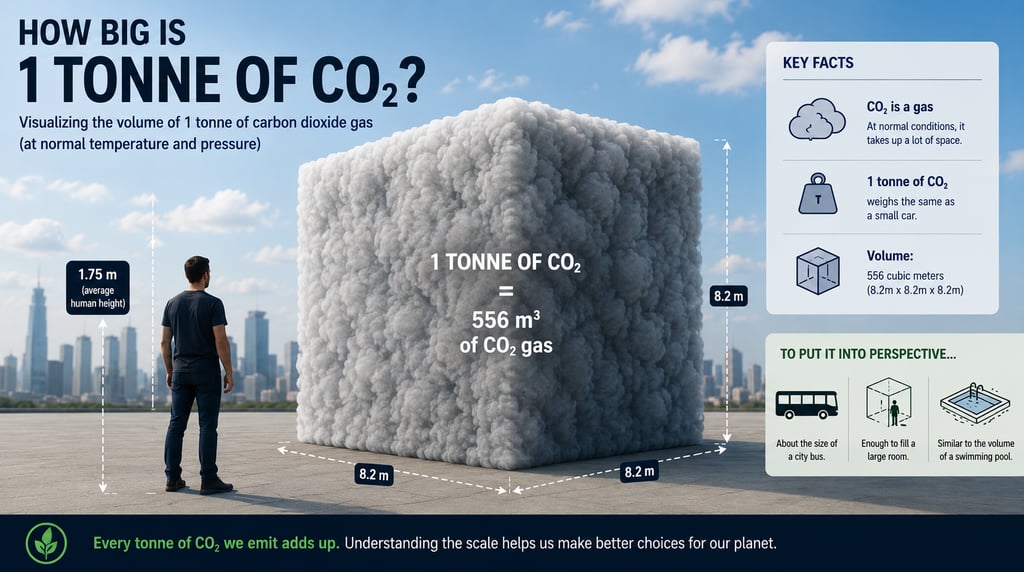
For every tonne of methanol produced this way, you release approximately 2.4 to 2.6 tonnes of CO₂ into the atmosphere. The methanol itself might burn cleaner than petrol at the tailpipe, but the production process is an enormous net contributor to greenhouse gas emissions. In China, where around 60 per cent of the world’s methanol production occurs, a significant portion comes from coal gasification, which is roughly twice as carbon-intensive again.
So, to be direct, if you take grey methanol made from natural gas or coal and burn it in a ship engine instead of bunker fuel, you haven’t solved the climate problem. You’ve essentially traded one fossil fuel problem for another, slightly smaller one with extra steps. Some legitimate critics of methanol as a clean fuel have a point. When they’re talking about grey methanol, they’re right.
But here’s where the story pivots. What happens if you change the source?
Making fuel from the sky.
The concept is called CO₂ valorisation. The idea is that carbon dioxide is currently the enemy, the byproduct of burning fossil fuels that’s accumulating in the atmosphere and driving climate change. CO₂ concentrations in the atmosphere have risen from 381 parts per million in 2006 to over 423 parts per million by 2024. That’s not a gradual drift. That’s a climb. And that is a major contributor to " global warming, " just for context.
But what if CO₂ isn’t just a waste product? What if it’s a feedstock?
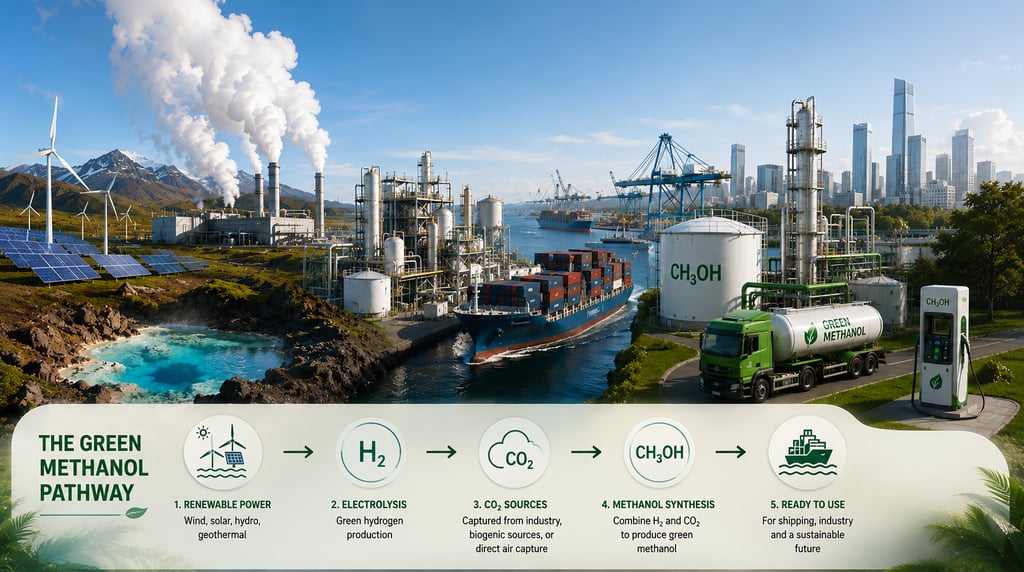
Here’s how green methanol production works.
Step one: capture CO₂. Either pull it directly from the atmosphere using direct air capture technology or capture it at the point of emission, from power plants, steel mills, cement factories, before it ever reaches the atmosphere.
Step two: produce green hydrogen. Run renewable electricity through water in a process called electrolysis, which splits the water molecule and liberates pure hydrogen with essentially zero carbon footprint.
Step three: combine them. Bring the captured CO₂ and green hydrogen together in a reactor under pressure and heat, in the presence of a copper-zinc-alumina catalyst. The output? Methanol. And water.
Let that sit for a moment. You start with the molecule that’s causing the climate crisis. You add water and renewable electricity. And you end up with a liquid fuel.
When that methanol is burned, it releases CO₂ back into the atmosphere, the same CO₂ that was captured to make it. The carbon isn’t coming from underground reserves of ancient organic matter. It’s cycling through the system. Taken from the air, used as fuel, returned to the air. A closed loop.
In life-cycle analysis, methanol produced this way can achieve negative net emissions. One recent analysis found that green methanol can deliver minus 0.3 tonnes of CO₂ equivalent per tonne of methanol produced. Compare that to conventional natural-gas methanol at 2.4 to 2.6 tonnes of CO₂ per tonne. The difference is roughly 2.7 to 2.9 tonnes of CO₂ avoided per tonne of fuel produced.
That is the transformation being talked about.
There are real challenges. Let’s not pretend otherwise.
Green methanol, as of 2025, costs between $700 and $1,100 per metric tonne to produce. Conventional grey methanol costs around $350 to $500. That’s a cost premium of nearly double. The main driver is green hydrogen, expensive to produce, and it accounts for 60 to 80 per cent of green methanol’s total production cost.
The good news is that electrolyser costs are falling fast. In 2010, electrolysers cost around $1,000 per kilowatt. By 2024, that had dropped below $300 in some markets. The trajectory continues downward. The economic case gets better every year.
There’s also the scale problem. To make a meaningful dent in global energy demand, you need methanol at a scale of hundreds of millions of tonnes per year. Current green methanol production is measured in hundreds of thousands, a rounding error. Scaling up requires massive investment in renewable energy, carbon capture infrastructure, and production plants. That doesn’t happen overnight.
And methanol is corrosive to some rubber seals and metals used in conventional fuel systems. Engines and storage infrastructure need to be specifically adapted. It’s an engineering problem, not a physics problem, but it means the transition isn’t seamless.
These are real obstacles. Anyone telling you otherwise is selling something. But none of them is reasons to dismiss the technology. They’re reasons to take it seriously and work on them.
It’s already happening.
This is the part of the methanol story that tends to surprise people. Because it’s not theoretical anymore.
In Iceland, a small island nation sitting atop a volcanic hot spot, generating almost 100 % of its electricity from renewable sources, a company called Carbon Recycling International built the world’s first commercial-scale power-to-methanol plant. They capture CO₂ from a geothermal power station that would otherwise vent into the atmosphere, combine it with hydrogen produced by electrolysis using Iceland’s cheap geothermal electricity, and produce what they call Vulcanol: renewable methanol from geological CO₂ and clean power. Iceland is, in many ways, the proof of concept for the entire green methanol vision.
In Denmark, a company called European Energy started up its commercial-scale e-methanol plant in January 2024. Their first major customer was Maersk, one of the world’s largest shipping companies. This is where the stakes become very clear. The shipping industry is responsible for roughly 3 % of global CO₂ emissions, generated largely by burning bunker fuel, essentially the leftover sludge from oil refining. The International Maritime Organisation (IMO) has set a target of net-zero emissions from shipping by 2050.
That deadline has forced every major shipping company on Earth to make decisions now about what fuel they’ll be running on in three decades. Electric ships aren’t viable at scale for ocean crossings. Hydrogen requires cryogenic storage and entirely new infrastructure. Ammonia is toxic. LNG is still a fossil fuel. Methanol is a liquid at room temperature, handleable with existing port infrastructure with modifications, with dual-fuel engines commercially available right now.
In Rotterdam, the largest port in Europe, OCI Global expanded its green methanol facility in 2024 with new electrolysis capacity. In Spain, Repsol announced in January 2025 plans to invest over €800 million in a green methanol plant that would process 400,000 tonnes of municipal solid waste annually.
The global green methanol market was valued at $2.28 billion in 2024. Analysts project it could reach nearly $32 billion by 2033, a 34 % annual growth rate.
These aren’t optimistic projections from clean energy advocates. These are figures from market research firms tracking real investments and real order books.
The bigger idea.
In 2005, Nobel Prize-winning chemist George Olah published a book called “Beyond Oil and Gas: The Methanol Economy.” His argument was, at the time, radical. Stop storing and transporting energy as hydrogen gas; it’s dangerous, difficult, and expensive. Instead, convert it to methanol. A liquid you can store in any tank, pump through any pipeline, ship across any ocean.
Methanol, Olah argued, could be the universal energy carrier for the post-fossil fuel age. Twenty years later, his argument looks increasingly prescient.
Because methanol isn’t just a fuel. It’s a platform. It can be burned directly in internal combustion engines. It can be converted to dimethyl ether, a clean diesel substitute. It can be reformed back into hydrogen at the point of use, making it a stable liquid hydrogen carrier. It can be blended into aviation fuel. It’s the feedstock for formaldehyde, acetic acid, and dozens of other industrial chemicals. If you can make methanol sustainably, from CO₂ and green hydrogen, you have something close to a Swiss Army knife for the energy transition.
Ships. Planes. Industry. Cars. Power grids. Agricultural chemicals. National energy security. Methanol can, in principle, touch all of them.
So why haven’t you heard about it?
Honestly? I think it’s partly because methanol doesn’t have the sleek narrative of an electric vehicle or the dramatic ambition of a fusion reactor. It’s a clear liquid in a tank. It doesn’t look like the future. It looks like chemistry homework.
There’s also the legitimate confusion between grey methanol and green methanol. Critics who point out that most methanol today is a fossil fuel product are correct. But they’re describing where we are, not where the technology is going. The same critique was levelled at electricity for decades: “it’s only as clean as the grid you’re charging from.” That criticism was fair at the time. It is less fair as the grid gets cleaner. The same logic applies here.
And perhaps there’s something about the way we talk about energy transitions that always wants a single hero. The one solution that fixes everything. But the real picture is messier and more interesting than that. It’s a portfolio. Solar for power generation. Wind for electricity grids. Batteries for short-range transport. And liquid fuels, green ones, made the right way, for everything that electricity can’t reach yet.
Methanol, made from captured CO₂ and renewable hydrogen, is a serious candidate for that last category. Not the only one. But a serious one.
The molecule hasn’t changed. The source can.
The molecule itself isn’t the issue. The molecule is remarkable - high octane, clean combustion, easy to store, easy to transport, compatible with infrastructure we already have with modest modifications.
The issue was always the source. As long as methanol is made from natural gas and coal, it’s just another fossil fuel wearing a slightly cleaner jacket. It doesn’t solve the problem. It shifts it.
But when methanol is made from CO₂ captured from the air, from industrial emissions that would have gone up into the atmosphere anyway, and hydrogen produced by splitting water with renewable electricity, the equation flips entirely. The same molecule that was part of the problem becomes part of the solution.
We’re not there yet. Green methanol is still more expensive than grey. The infrastructure isn’t fully built. The regulatory frameworks are still being written. The technology, particularly carbon capture at scale and cheaper electrolysers, is still maturing. But the direction is clear. The investments are flowing. The shipping industry is committing. The engineers are building.
This small molecule might not fix everything. No single fuel ever does. But in the complex, urgent task of decarbonising the hardest-to-decarbonise parts of the global economy, methanol has a role to play that almost no other candidate can match.
It’s a liquid. It’s storable. It’s transportable. And it can power the things that electricity, for now, simply cannot reach.
The next time someone talks about the hydrogen economy, or the electric future, or carbon capture, remember this molecule. Because the answer might be simpler than it looks.
Until next time.
Watch that thought.